
For bettors, the 2017/2018 Bundesliga season revolved around a small cluster of big clubs whose matches dominated markets but behaved very differently once you looked beneath the results. Bayern Munich, Borussia Dortmund, Schalke 04, Hoffenheim and RB Leipzig all finished toward the top end of the table, yet their tactical styles, defensive records and streak patterns created distinct risk profiles that could reward careful pre‑match analysis or punish lazy assumptions. Treating each of these teams as a separate case study, rather than as one uniform “big club” category, is what turns a betting slip from a guess into a decision backed by evidence.
Which Clubs Counted as “Big Teams” in 2017/2018?
Before you can judge form, you need clarity on which sides genuinely sat in the “big team” bracket that season. The final 2017/2018 table placed Bayern Munich first, followed by Schalke, Hoffenheim and Dortmund, with RB Leipzig also competing in the upper half and in European discussions, so these five clubs carried the heaviest expectations and shortest prices most weeks. Their reputations meant markets often assumed dominance, yet each club’s campaign contained its own mix of stability, volatility and structural issues, so grouping them together without nuance risked overpaying for the badge rather than correctly pricing the football.
Bayern Munich: When Were Heavy Favourites Worth the Price?
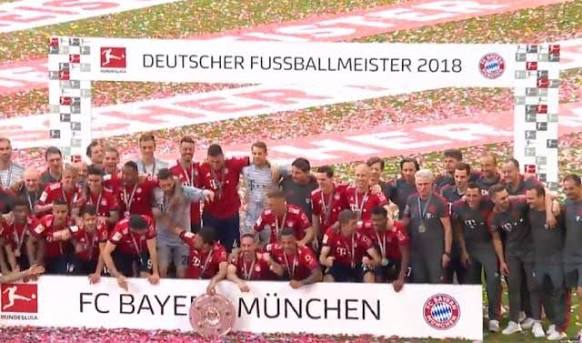
Bayern’s 2017/2018 dominance is clear in the numbers: they won the league by a wide margin, scored the most goals and conceded among the fewest, clinching the title with games to spare. At home, they were particularly strong, often winning by multiple goals, which aligned with odds that regularly implied very high win probabilities; away from home, their control remained strong, though margins of victory could tighten when rotation or schedule congestion came into play. For pre‑match bettors, the main question was rarely whether Bayern would win, but whether the offered handicap or goal line still left any value once the market had fully priced their superiority.
Conditional Scenarios for Bayern Bets
The mechanism that turned Bayern from an automatic selection into a nuanced decision hinged on context. When they entered a league match without midweek European distractions, fielded a near‑full‑strength XI and faced a bottom‑half opponent, their historical record in 2017/2018 suggested a high probability of clear wins that justified even aggressive handicaps. However, in periods with Champions League ties clustered around domestic fixtures, rotation, fatigue and lower intensity could reduce margins, meaning that the same handicap line suddenly carried more downside relative to its price; in those weeks, bettors who noticed team news and schedule pressure before placing a bet were better placed to avoid over‑valued positions.
Borussia Dortmund: High Ceiling, Unstable Floor
Dortmund’s season contrasted sharply with Bayern’s relative calm. While they ultimately finished in the Champions League places, their campaign featured a coaching change, spells of defensive fragility and runs of wildly varying results, ranging from dominant attacking displays to unexpectedly poor performances. Their attacking quality and home support often drove short odds, but their back line’s inconsistency meant that even as favourites they were more vulnerable to conceding and being dragged into high‑variance scorelines than their final league position alone implied.
For pre‑match analysis, that volatility translated into different preferred markets. Instead of treating Dortmund as a straightforward “to win” option every week, bettors had more reason to lean toward goals‑based bets or both‑teams‑to‑score positions when the opposition had any credible attacking threat. In fixtures where they faced compact, counter‑attacking sides, the risk of Dortmund dominating territory yet conceding soft goals increased, so blindly trusting them on short 1X2 prices undervalued the possibility of chaotic matches even when they still possessed the higher ceiling on paper.
Schalke 04: Results-Driven Stability With Limited Fireworks
Schalke finished second in 2017/2018, yet their path there relied more on compact structure and grinding results than on spectacular attacking numbers. Their goals scored and conceded figures painted a picture of a team that managed matches efficiently, often winning by narrow margins and keeping games under firm tactical control rather than engaging in shootouts. This profile made them more predictable than Dortmund in many fixtures, but it also meant that big handicaps or very high goal totals were harder to justify unless the match‑up strongly favoured them.
From a betting standpoint, Schalke’s reliability stemmed from their ability to maintain shape and protect leads, which supported conservative handicap and under‑goals approaches more than aggressive overs. When they faced top attacks, their cautious setup could still limit damage even in defeat, reducing the appeal of extreme lines on opponents expecting to blow them away. Pre‑match analysis that recognised Schalke’s emphasis on structure over spectacle would treat them as a club to trust in tight, controlled games, but not necessarily as the source of large‑margin wins or consistently high scorelines.
Hoffenheim and RB Leipzig: Attack-Minded Sides With Swing Potential
Hoffenheim and RB Leipzig both operated with attack‑friendly approaches, aiming to press, transition quickly and exploit space, which produced stretches of high‑scoring matches and fluctuating results. Hoffenheim’s strong run into the top three reflected their ability to turn those principles into sustained output, while Leipzig’s campaign mixed impressive wins with defensive lapses, particularly when their high‑energy game left them exposed at the back. For bettors, that meant these teams generated more opportunities for overs and both‑teams‑to‑score bets, but also carried greater risk on short prices in games where opponents could counter or break their press.
The key pre‑match question with these sides was not only whether they were better than their opponents, but whether the tactical clash would amplify or dampen volatility. Against open adversaries, Hoffenheim and Leipzig often participated in wild contests where multiple goal swings were plausible, but against deep‑lying teams willing to surrender the ball without space in behind, their attacks could look more predictable and attritional. Recognising those conditional outcomes helped bettors decide whether to lean into goal markets and potential comebacks or to step back when the match‑up muted their usual strengths.
Comparing Big Team Profiles for Betting Purposes
Placing the big clubs side by side clarifies why “form” needs to be interpreted through structure rather than purely through streaks. Bayern combined the best attack with a strong defence and deep squad, Schalke prioritised order and narrow wins, Dortmund oscillated between brilliance and vulnerability, while Hoffenheim and Leipzig leaned into risk‑reward football built on high intensity. That diversity means the same league position or recent run of results could imply very different betting choices depending on which badge you were dealing with.
| Team (2017/18) | Core traits in that season | Typical betting impact before kick-off |
| Bayern Munich | Dominant attack, strong defence, deep rotation | Often justified as heavy favourite, but handicap value depended on schedule and line‑ups |
| Borussia Dortmund | Powerful attack, shaky defence, coaching change | Better suited to goals markets; risky on very short win odds |
| Schalke 04 | Structured, defensively solid, modest scoring | Favourable for unders and narrow handicaps, less for big wins |
| Hoffenheim | High‑tempo, creative, open games | Frequent candidate for overs and BTTS positions |
| RB Leipzig | Pressing, transition-heavy, occasionally exposed | Strong in some matchups, volatile against good counters |
Reading this matrix before each round would push a bettor to ask, “What kind of game does this team typically create?” rather than, “Are they a big club on a winning streak?” By tying each club to consistent tendencies, you can match them with markets that fit those traits instead of forcing every opinion into a simple home‑win or away‑win decision, reducing the chance that brand power blinds you to proven weaknesses or recurring patterns.
Where UFABET Can Support Structured Big-Team Analysis
Once a bettor has mapped out how each big Bundesliga side behaved in 2017/2018, the next step is implementing those insights in actual or simulated wagers. Under a scenario where someone wants flexible access to different bet types for German football, they might turn to a betting platform such as ufabet168, using its selection of 1X2, total goals, handicaps and player markets to align each big‑team profile with a fitting market rather than defaulting everything into the same simple bets. By consciously pairing Bayern with carefully chosen handicaps, Dortmund with totals or BTTS positions, Schalke with unders, and so on, the bettor turns abstract season analysis into a structured approach, always aware that the breadth of options is a tool for expressing an edge, not a guarantee that one exists in every fixture.
Avoiding Casino-Like Thinking When Assessing Big Clubs
Big‑club matches can tempt bettors toward casino‑style impulses, especially when late goals, dramatic comebacks or viral highlights make every game feel like a high‑stakes spin. When those same bettors move into a broader gambling environment, the instant‑result nature of a casino online setting reinforces habits of chasing excitement over analysis. By contrasting that mindset with the deliberate process required to dissect big Bundesliga teams—looking at tactics, fatigue, opponent style and price—bettors can see that league betting rewards patience and evidence, whereas casino games hinge mostly on fixed probabilities. Keeping that distinction clear helps prevent them from treating Bayern or Dortmund fixtures as quick‑hit gambles and instead encourages them to reserve real stakes for matches where their pre‑match work shows a genuine edge.
Summary
Analysing the major Bundesliga clubs in 2017/2018 before placing a bet means focusing on how each team’s tactical identity, defensive stability and schedule shaped its risk profile, not just on reputation or recent scorelines. Bayern offered controlled dominance that often justified favouritism, Schalke delivered tight, structured matches, Dortmund fluctuated between high‑scoring brilliance and vulnerability, and Hoffenheim plus Leipzig injected volatility that suited goal markets more than simple win bets. For pre‑match bettors, turning those patterns into a repeatable framework—choosing markets that fit each profile and staying alert to context changes—provides a more robust foundation for decision‑making than treating all big clubs as interchangeable safe options whenever their odds appear short.