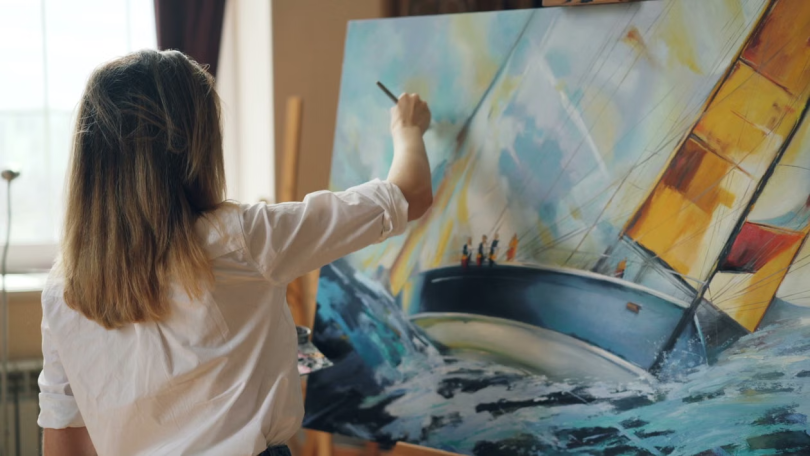

Art has never been separated from the world around it. It changes as people change, absorbing the concerns, tools, beliefs, and questions of each era. From early drawings on stone walls to immersive digital installations, creative expression has always reflected how humans understand themselves and their surroundings. This ongoing evolution is not a break from tradition, but a continuation of art’s oldest purpose: to communicate experience in ways that words alone cannot fully capture. As societies become more connected, more technologically advanced, and more aware of global challenges, art continues to adapt in form, meaning, and reach.
Art Reflects the Values and Questions of Its Time
Every period in history has produced art that reveals what people valued, feared, celebrated, or resisted. Religious paintings, royal portraits, protest posters, public murals, documentary photography, and abstract works all carry evidence of the environments that shaped them. When communities face political change, migration, inequality, environmental pressure, or new ideas about identity, artists often respond by creating work that helps people process those shifts. Art does not simply record events. It interprets them, giving emotion and context to moments that might otherwise be reduced to dates, facts, or headlines. This is one reason art remains relevant even when styles change. Its materials may evolve, but its relationship with human experience stays constant.
Technology Expands What Artists Can Create
Technology has long influenced artistic progress, from the development of oil paint and printmaking to photography, film, digital editing, 3D modeling, and artificial intelligence. Each new tool changes what is possible, but it does not remove the need for vision, discipline, or interpretation. A camera can capture an image, but an artist decides how to frame it, what light to use, what moment matters, and what the final image should suggest. Digital tools can open new paths for experimentation, allowing creators to work with motion, sound, interactivity, and virtual space. These advances have also changed how audiences encounter art, making it possible to view exhibitions online, discover independent artists through social platforms, and engage with works that respond to movement or participation.
Global Connection Brings New Perspectives into View
As cultures interact more frequently, art increasingly reflects exchange rather than isolation. Artists may draw from local traditions while responding to international conversations about place, memory, justice, nature, or technology. This does not mean that all art becomes the same. In many cases, global connection makes distinctive voices more visible, especially when artists use contemporary platforms to share work beyond traditional institutions. A viewer might encounter a street mural from one city, a textile practice rooted in another region, and a photographic series from a reputable fine art photography gallery all within the same afternoon. These encounters can broaden how people understand beauty, history, and meaning, while also encouraging artists to consider audiences whose experiences differ from their own.
Audiences Help Shape the Life of Art
The evolution of art is also shaped by the people who view, share, discuss, collect, preserve, and question it. In the past, access to many artworks depended heavily on museums, galleries, religious institutions, or private collections. Those spaces still matter, but the public now has more ways to encounter and respond to creative work. Online platforms allow people to revisit images, compare interpretations, and learn directly from artists. Community projects invite residents to take part in the creation of public art. Interactive exhibitions ask viewers to become participants rather than passive observers. This wider involvement changes the lifespan of an artwork. A piece may begin in a studio, but its meaning can expand through conversation, education, criticism, and personal response.
Tradition Remains Part of Artistic Progress
Although art continues to evolve, it does not move forward by abandoning everything that came before. Many contemporary artists work in conversation with older techniques, symbols, and forms. A painter may study classical composition while addressing modern life. A sculptor may use traditional materials to explore current ecological concerns. A photographer may use historical processes alongside digital refinement. This relationship between past and present gives art depth. It allows innovation to feel connected rather than detached, and it reminds viewers that creative progress is often built through reinterpretation. The strongest new work frequently carries traces of earlier movements while asking fresh questions about the world people inhabit now.
Conclusion
Art continues to evolve because the world continues to evolve. New technologies, social movements, cultural exchanges, and audience expectations all influence how artists create and how viewers respond. Yet the deeper purpose of art remains familiar. It helps people observe more carefully, feel more deeply, and think more openly about the conditions of life. Whether made with pigment, paper, camera, code, found materials, or immersive systems, art remains a human effort to make meaning from change. Its evolution is not a trend or a departure from authenticity. It is evidence that creativity remains alive, responsive, and essential in a world that never stands still.