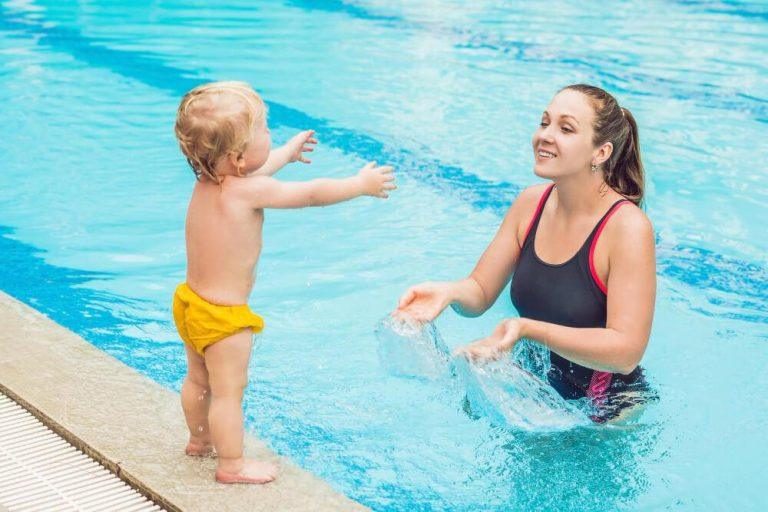

Drop a baby into a pool with a stranger and expect them to relax. It doesn’t happen, and it’s not supposed to. That’s exactly why almost every quality infant program keeps a parent or guardian in the water instead of handing the baby off. It’s not a scheduling formality. It’s actually one of the most important parts of the whole lesson.
If you’re looking into baby swim lessons near me and wondering why parent involvement gets so much emphasis at this age, the reasoning comes down to how babies actually learn to feel safe in new environments.
Babies Regulate Through Their Parents, Not On Their Own
Infants don’t have the ability to self-soothe the way older kids or adults can. When something feels unfamiliar or overwhelming, a baby looks to whoever is holding them to figure out whether it’s safe. This is called co-regulation, and it’s one of the main reasons babies calm down faster in a parent’s arms than with anyone else, even someone gentle and experienced.
Water is a completely new sensory experience for an infant. Without a parent right there providing that steady, calm presence, a baby has no real reference point for whether this new environment is something to be scared of. With a parent holding them, that reference point exists from the very first second they touch the water.
It Speeds Up Comfort and Trust
Babies who start lessons with a parent in the pool tend to relax into the water faster than babies who don’t have that consistent physical closeness. Comfort isn’t something you can rush or teach through repetition alone. It comes from feeling secure, and for an infant, security is almost entirely tied to physical closeness with a trusted adult. This doesn’t mean independent instruction never works. It just means the early stages go more smoothly, and with less crying and resistance, when a parent is right there providing that anchor point.
Parents Learn the Skills Too
A lot of parents assume swim lessons are only about the baby learning something, but a good chunk of what actually happens in an infant class is parent education. Parents learn how to hold their baby safely in water, how to support proper body positioning, and how to read subtle cues that signal when their baby is overstimulated or ready for a break.
These are skills most parents don’t walk in already knowing. Holding a slippery, squirming infant in water is genuinely different from holding them on land, and getting hands-on guidance from an instructor in real time makes a bigger difference than any amount of reading about it beforehand.
It Builds a Foundation for Future Independence
This might sound backwards, but babies who get more supported, parent-involved lessons early on often transition into independent swimming more smoothly later. The comfort and trust built during this stage doesn’t just disappear once a child moves into a toddler or preschool class without a parent in the water.
Kids who felt secure in the water from the start tend to carry that comfort forward. The ones who struggle most with independent lessons later are often the ones who never had that early, low-stress foundation to build on. Skipping the parent-involved stage doesn’t actually save time. It usually just delays the discomfort to a later point.
This is part of why the structure of a program matters just as much as the instructor teaching it. When you’re comparing different pool schools, it’s worth asking directly how parent involvement is built into the earliest classes, rather than assuming every program handles it the same way.
It Gives Parents a Front Row Seat to Progress
There’s something valuable about actually being in the water when your baby hits a small milestone, whether that’s kicking on their own for the first time or staying calm through a gentle back float. Parents who are hands-on during lessons get to witness these moments directly instead of hearing about them secondhand.
That kind of direct involvement also builds parental confidence. A parent who’s been coached on proper technique and has practiced it themselves in the pool is far more likely to feel comfortable bringing their baby into water outside of class, whether that’s a backyard pool, a lake trip, or just bath time.
It Reduces Anxiety on Both Sides
Babies aren’t the only ones who can feel nervous about swim lessons. Plenty of parents feel unsure the first time they bring an infant into a pool setting, especially if they’re not confident swimmers themselves. Being an active participant in the class, rather than watching from the sidelines, actually helps parents settle into the process too.
Instructors who work specifically with infants are used to coaching parents through this nervousness. They’ll walk you through exactly what to do, correct your hold if needed, and explain what’s happening at each stage so it doesn’t feel like guesswork. If you want a clearer picture of what that first class actually looks like, Get in touch with us and we can walk you through it.
What to Expect as Participation Changes Over Time
Parent involvement doesn’t stay exactly the same forever. As babies grow into toddlers and build more independent comfort in the water, the level of hands-on support naturally decreases. This shift usually happens gradually and is guided by the instructor based on how ready the child actually is, not a fixed timeline that applies to every kid the same way.
The early months of heavy parent involvement aren’t a phase to rush through. They’re doing real, foundational work that makes every later stage of swim instruction go more smoothly. A baby who feels safe and supported early on is simply a more receptive, confident learner once it’s time to build actual swim skills, and that difference tends to show up for years, not just during those first few classes.
It’s also worth remembering that no two babies move through this at the same pace. Some infants relax into the water within the first couple of sessions, while others need weeks of steady, familiar routine before they stop fussing the moment they touch the surface. Neither pace is wrong, and comparing your baby’s progress to another child’s rarely tells you anything useful.
What actually matters is whether the trend is moving in the right direction over time, not how any single class goes. A parent who stays consistent, shows up calm even when a session doesn’t go smoothly, and trusts the process tends to see steady progress even when it doesn’t feel that way week to week.