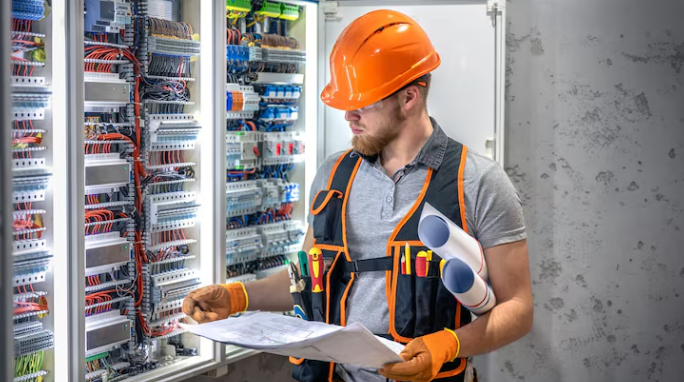

Most facilities add automation before they check whether their electrical infrastructure can actually support it. That order of operations causes more delays and budget surprises than almost anything else in an automation project. An industrial electrical contractor brought in during the planning stage, not after equipment is already on order, usually catches these gaps before they turn into a stalled installation.
Automation gets the attention because it’s the visible part of the project. Power distribution, panel capacity, and controls infrastructure sit underneath all of it, and none of it works without electrical systems built to handle the load. It’s the kind of groundwork nobody notices when it’s done right, and everybody notices when it isn’t.
Power Capacity Gets Underestimated More Than Anything Else
A lot of facilities are running on electrical infrastructure that was sized for what the building needed years ago, not what it needs now. Adding conveyor systems, robotics, or ASRS equipment pushes demand well past what older panels and distribution systems were designed to carry.
The problem is that this usually doesn’t show up until equipment is already being installed and someone realizes the panel can’t support the additional load. At that point, you’re looking at a delay while electrical upgrades get scoped and permitted, on top of the automation project that’s already underway.
A power capacity assessment before automation gets ordered avoids that entirely. It’s a straightforward step that gets skipped more often than it should, usually because it feels like a formality until it isn’t.
The assessment itself doesn’t take long, but the findings often change the sequencing of the whole project. A facility that discovers it needs a service upgrade has a very different timeline than one that finds its existing infrastructure has room to spare, and that difference needs to be known before equipment lead times start counting down.
Panel Upgrades Aren’t Just About Adding Capacity
When people think about electrical upgrades, they usually think about bigger panels and more amperage. That’s part of it, but panel upgrades also need to account for how automation actually draws power, which is different from how a facility without automation typically operates.
Automated equipment often has variable load patterns, drawing more power during startup or peak operation than during steady-state running. Panels sized only for average load can struggle during those spikes, leading to nuisance trips or, worse, equipment damage over time.
This is where working with someone who understands both electrical systems and automation equipment matters. A panel that looks adequate on paper can still be undersized for how the specific equipment actually behaves once it’s running.
Backup Power Becomes More Critical Once You’re Automated
A power outage in a manual facility is disruptive. A power outage in an automated facility can be a much bigger problem, because equipment doesn’t just stop, it can leave product mid-process, requires a restart sequence, and sometimes needs manual intervention to clear before operations resume.
Backup power planning changes once automation is involved. It’s not just about keeping lights on. It’s about making sure critical systems, especially anything controlling automated equipment, have enough backup capacity to shut down safely or keep running through a short outage without creating a bigger mess to clean up afterward.
This is a detail that’s easy to overlook during the excitement of an automation project, but it’s exactly the kind of thing an industrial construction company with experience in automated facilities will flag early, because they’ve seen what happens when it gets missed.
Facilities that skip this planning often find out the hard way, during the first outage after automation goes live, that their backup power wasn’t sized for the equipment now depending on it.
Controls Infrastructure Needs Room to Grow
PLC systems, low voltage wiring, and network infrastructure for automation controls all need to be planned with some room for expansion, not just sized for whatever equipment is going in right now.
Facilities that automate in phases, which is most of them, run into problems when the initial controls infrastructure wasn’t built to accommodate the next phase. Adding capacity later means additional conduit runs, more panel space, and sometimes reworking wiring that was installed without expansion in mind.
Planning controls infrastructure with future phases in mind costs more upfront, but it’s a fraction of what it costs to retrofit later once walls are closed up and equipment is already running around the areas that would need to be accessed.
This is one of those decisions that’s easy to defer because phase two feels far enough away not to worry about yet. But conduit and panel space are much cheaper to over-build during initial construction than to add once the facility is fully operational and every retrofit has to work around live equipment.
Grounding and Power Quality Matter More With Sensitive Equipment
Automation equipment, especially anything with sensors, controllers, or vision systems, is more sensitive to power quality issues than the equipment it’s often replacing. Voltage fluctuations that a basic conveyor motor shrugs off can cause real problems for a PLC or a robotics controller.
Proper grounding and power conditioning aren’t glamorous parts of an electrical upgrade, but they directly affect how reliably automation equipment runs. Facilities that skip this step sometimes end up chasing intermittent equipment faults for months before someone traces it back to a power quality issue instead of a mechanical one.
Diagnosing that kind of problem after the fact is expensive and frustrating, because everyone starts by suspecting the equipment itself. Technicians swap parts, adjust settings, and run diagnostics on the robotics or controls before anyone thinks to check the power feeding it. Getting grounding and power quality right from the start avoids that entire cycle.
If you’re planning an automation project and haven’t had your electrical infrastructure assessed against what the equipment will actually need, that’s worth doing before anything gets ordered. You can Speak With Us about what your current setup can support and where the gaps are likely to show up.
Why This Planning Needs to Happen Early
Electrical upgrades take time to permit and install, and that timeline doesn’t shrink just because an automation project is moving fast. Facilities that treat electrical assessment as an early step, rather than something to figure out once equipment arrives, avoid the scramble of trying to fit permitting and construction into an already tight installation schedule.
The facilities that get automation projects right tend to be the ones that looked at power, panels, backup systems, and controls infrastructure before locking in equipment orders, not after. That sequencing decision alone prevents most of the delays that show up later.